Your Creative Journey Begins Here: Exploring Printable Digital Designs
In the vibrant world of modern creativity and entrepreneurship, the phrase "Hello and Welcome to my T-Shirt Design Store" isn't just a friendly greeting. It’s an invitation into a universe where art, technology, and personal expression converge. This article will guide you through the exciting realm of printable digital designs, explaining their purpose, significance, and how they empower individuals to create unique products for themselves, their communities, and even their businesses.
The Foundation: What Are Printable Digital Design Files?
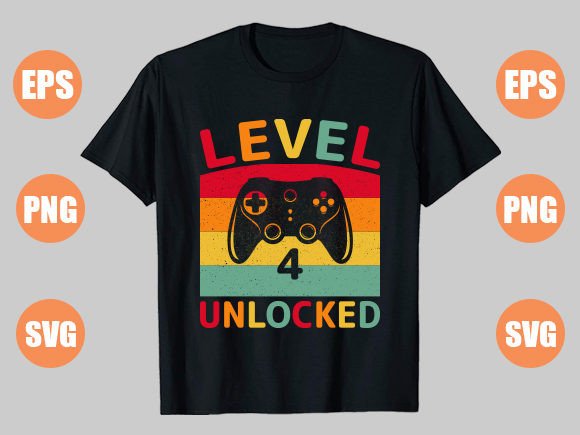
At its core, a printable digital design is a high-quality graphic file created specifically for physical production. Unlike a standard image downloaded from the web, these files are engineered for fabrication. The example provided—a gaming t-shirt design featuring the playful "Level 4 Unlocked" motif—is not merely a picture. It is a complete digital toolkit. When you purchase such a design, you acquire a set of files, typically including an EPS, SVG, and a high-resolution PNG (like 4500×5400 pixels at 300 dpi), all compressed into a convenient ZIP archive.
Each file format serves a distinct technical purpose. The SVG (Scalable Vector Graphic) allows for infinite resizing without loss of quality, perfect for adapting a design to different products. The EPS (Encapsulated PostScript) is a standard in professional printing and design software. The high-DPI PNG provides a ready-to-use, detailed raster image. Together, they offer flexibility, ensuring your design looks flawless whether printed on a t-shirt, a mug, or a pillow.
The Practical Relevance: From Digital File to Physical Product
The true magic lies in the application. These designs are the raw materials for a wide array of personalized products. As mentioned, they are ideal for:
- Sublimation Printing: A technique where ink is transferred into polyester fabrics or coated materials, resulting in vibrant, full-color prints.
- T-Shirts: The classic canvas for personal expression, perfect for gifts, team apparel, or business merchandise.
- Mugs and Drinkware: Transforming everyday objects into custom keepsakes for special occasions.
- Pillows and Home Decor: Bringing personalized artistry into living spaces.
This process democratizes creation. You no longer need to be a professional graphic artist or have large-scale printing contracts. With a digital design file, a compatible printer (like a sublimation printer or an inkjet for transfer paper), and a blank product, you can manufacture items yourself. This fits beautifully into modern life, supporting small businesses, hobbyists, gift-givers, and anyone celebrating a "Special Day Occasion"—from birthdays to gaming tournament victories.
Significance in Modern Creativity and Commerce
The ability to buy and use these digital files represents a significant shift in both creative expression and micro-commerce. It aligns perfectly with trends in do-it-yourself (DIY) culture, the maker movement, and the rise of niche online stores. For the individual, it’s a tool for personalization. For a friend or family member supporting your occasion, it’s a means to create a truly unique, supportive gift. For an aspiring entrepreneur, it’s a scalable product line.
Consider the gaming theme. Gaming is not just entertainment; it's a culture with communities, identities, and achievements. A "Level 4 Unlocked" design taps into that shared language, offering fans a way to wear their passion. This illustrates how digital designs connect with subcultures and personal identities, making them profoundly relevant in today’s socially connected world.
Clarifying Common Misunderstandings
Several assumptions often surround digital designs. Let’s clarify them to build a clearer understanding:
- Misunderstanding 1: "It’s Just an Image." As explored, it’s a professional-grade set of files for production. The high resolution (300 dpi) ensures print clarity, and the vector formats (SVG/EPS) provide professional versatility.
- Misunderstanding 2: "You Need Extreme Technical Skill." While some software knowledge is helpful, many printing services and home printers offer straightforward processes using PNG files. The included formats cater to both beginners and experts.
- Misunderstanding 3: "The Purchase is for a Physical Item." You are buying a license to use the digital asset to create physical items. You are responsible for the printing and production, which is where your creative journey truly begins.
- Misunderstanding 4: "File Handling is Difficult." The files come in a ZIP archive—a single compressed package. Using tools like WinZIP, WinRAR, or even your computer’s built-in "Double Click and Extract" function makes accessing the files simple.
The Broader Context: Digital Designs in Technology and Education
This topic sits at a fascinating intersection of technology, business, and education. On the technological side, it relies on advancements in digital graphics software, affordable home printing technology, and global e-commerce platforms that allow designers to sell their files worldwide. It’s a direct application of the digital goods economy.
In educational contexts, learning to use these files can be a practical entry point into graphic design principles, file format management, and small-scale manufacturing. It encourages problem-solving: Which format should I use for my sublimation printer? How do I position the design on a mug template? This hands-on learning builds digital literacy and practical skills.
For work and business, these designs are a cornerstone for many solo entrepreneurs and side hustles. Someone can purchase a design, apply it to products, and sell them on platforms like Etsy or at local markets, creating a streamlined supply chain. The design store itself, welcoming you with its sparkling ✨, is often a small business run by an independent artist, completing a virtuous cycle of creative commerce.
Examples of Natural Integration into Daily Activities
To understand this topic naturally, imagine these real-world scenarios:
- A Gaming Fanatic: After finally beating a difficult game level, they buy the "Level 4 Unlocked" design. They use a home sublimation press to print it on a t-shirt, wearing it proudly at the next gaming convention or online stream.
- A Parent Planning a Birthday: For a child obsessed with a specific cartoon, they find a relevant digital design. They print it on a pillowcase, creating a one-of-a-kind birthday gift that becomes a cherished bedroom decoration.
- A Small Cafe Owner: Looking to boost merch sales, they purchase a sleek, vector-based logo design. They use the EPS files with a professional printer to produce branded mugs and t-shirts for customers, enhancing brand loyalty.
- A Crafting Group: Friends gather for a DIY night. They each choose a digital design, learn the basics of heat pressing together, and create personalized items, blending social activity with creative output.
These examples show how the process moves seamlessly from a digital download to an activity that enhances hobbies, celebrations, and business ventures.
Building a Complete Understanding: The End-to-End Process
Let’s walk through the entire journey from discovery to finished product to solidify your broader understanding of the subject.
Step 1: Discovery & Purchase. You visit an online store, like the one warmly inviting you in our introductory text. You browse designs that fit your need—be it gaming, a special occasion, or a business idea. You select your design and purchase the digital file package.
Step 2: Access & Extraction. You download the ZIP file. Using your computer’s extraction tool (as instructed: WinZIP, WinRAR, or double-clicking), you unpack the folder to access the EPS, SVG, and PNG files. This is a key technical step—ensuring you have the raw assets.
Step 3: Selection & Preparation. Based on your printing method and product, you choose the appropriate file. For many home crafters, the high-resolution PNG is the easiest starting point. You might open it in simple software to resize or position it on a provided product template.
Step 4: Production. This is the hands-on phase. You prepare your blank product (t-shirt, mug, pillow). Using your chosen printing technique—sublimation, heat transfer vinyl, etc.—you apply the design to the product. This step transforms the digital art into a tangible object.
Step 5: Use, Gift, or Sell. The final step is integration into life. You wear the t-shirt, gift the mug, decorate with the pillow, or list the product in your own small store. The digital design has fulfilled its purpose: enabling personalized creation.
The Purpose and Ultimate Significance
The overarching purpose of printable digital designs is empowerment. They break down barriers between creative idea and physical reality. Their significance is multifaceted:
- Economic: They support micro-economies of artists, makers, and small businesses.
- Social: They facilitate personalized communication and community bonding through customized goods.
- Technological: They represent a practical, user-friendly application of digital graphics and manufacturing technology.
- Personal: They give individuals agency over their environment and style, allowing for expression that mass-produced items cannot offer.
When you see a greeting like "Hello and Welcome to my T-Shirt Design Store✨" and a description of a versatile gaming design, you are not just looking at a product listing. You are looking at a gateway. It’s an offer to participate in a creative process that blends art, tech, and craft, inviting you to unlock your own level of creativity and bring something uniquely yours into the world.