The Art and Strategy of Minimalist Chess Piece Design for Digital Branding
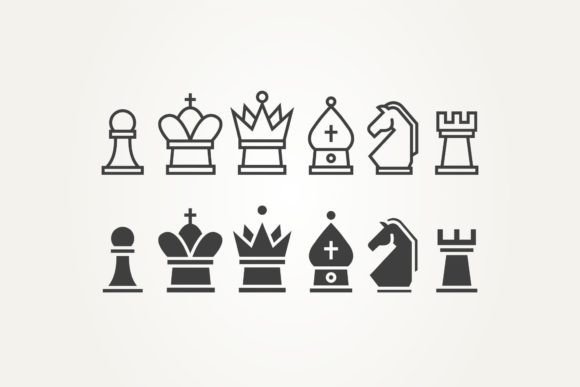
In the intersection of classic gaming, modern app development, and digital branding lies a fascinating design discipline: the creation of minimalist chess piece icons. These simple yet profound symbols, representing the king, queen, rook, bishop, knight, and pawn, have evolved far beyond their wooden counterparts on a physical board. Today, they serve as crucial visual elements for gaming app logos, website icons, and template illustrations, embodying strategy, intellect, and competition in a single, clean graphic. This exploration delves into the purpose, process, and profound utility of these design collections, unpacking why a well-crafted vector file of a chess piece can be a cornerstone of digital identity.
From Game Board to Digital Canvas: Understanding Minimalist Chess Design
At its core, minimalist design seeks to communicate an idea using the fewest possible visual elements. When applied to chess pieces—complex historical objects rich in detail—the challenge is to distill their essence. A minimalist king must retain its crown-like authority without intricate ornamentation; a knight should suggest a horse’s head with mere curves and lines. This stripping down to basic shapes doesn't diminish their meaning but rather concentrates it. For a general audience, these icons become instantly recognizable, tapping into a universal cultural understanding of chess as a game of strategy. Their simplicity ensures they function effectively at small scales, such as on a mobile app icon, where detail would become visual noise.
The purpose of such a collection—often bundled as a set of EPS 10, SVG, PDF, and JPG files—is to provide a versatile, foundational design asset. The EPS (Encapsulated PostScript) vector file, particularly when opened in professional software like Adobe Illustrator, is the gold standard. Vector graphics are mathematically defined, meaning they are infinitely scalable without any loss of quality. This allows a designer to take a simple pawn icon and enlarge it for a website hero image or shrink it for a favicon, all from the same source file. This scalability is paramount for modern digital applications, which demand assets that perform seamlessly across devices from smartphones to desktop monitors.
The Practical Relevance in Modern Digital Life
How does a collection of chess piece design elements fit into contemporary work, creativity, and technology? The connections are numerous and powerful.
- Gaming App Development: For an indie developer creating a chess app, a strategy game, or even a puzzle game invoking tactical thinking, these minimalist pieces offer a ready-made, professional logo system. They communicate the app's genre instantly in crowded marketplace stores.
- Business & Branding: Beyond gaming, chess symbolizes strategic thinking, foresight, and intellectual competition. A consultancy firm, an educational platform, or a finance blog might adopt a stylized rook or bishop as part of its logo to subtly convey these values. The minimalist aesthetic aligns with modern, clean corporate branding.
- Educational Tools: In digital learning modules teaching chess, logic, or problem-solving, these clear icons serve as perfect visual aids. Their simplicity prevents distraction, focusing the learner on the concept or move being taught.
- Template & Design Resources: For freelancers and agencies, such a collection acts as a high-quality starting point. As the product description notes, the vector-based designs can be changed as wished—colors can be altered, shapes slightly modified, and elements combined to create a unique final logo, saving immense time in the design process.
The Significance of Multi-Format File Bundles
A key aspect of these professional design collections is the inclusion of multiple file formats. Each serves a distinct role in the digital workflow, addressing a common misunderstanding that one image file is sufficient.
- EPS 10: This is the primary, editable vector file. Using Adobe Illustrator ensures the best results, as it preserves all vector paths and layers, allowing for deep customization. This is the “source code” of the design.
- SVG (Scalable Vector Graphics): This web-friendly vector format is crucial for modern web development. It can be embedded directly into HTML code, used for interactive web elements, and scaled dynamically by CSS, making it ideal for responsive websites.
- PDF (Portable Document Format): Often containing the vector data, a PDF provides a reliable, viewable, and printable document that is easy to share with clients or team members for review without specialized software.
- JPG (Joint Photographic Experts Group): This raster image provides a ready-to-use, fixed-size image for contexts where vector support isn't available, such as in some social media previews or quick placeholder imagery during prototyping.
This four-file approach ensures the design is practical and relevant across the entire spectrum of digital creation—from high-end professional logo manipulation to straightforward web implementation.
Clarifying Common Assumptions and Usage Guidelines
Two points from the typical product description often require clarification for a broader audience. First, the statement “You can change vector-based designs as you wish” underscores the flexibility of vector graphics. Unlike a purchased JPG, which is a static image, a vector file’s lines, points, and curves can be adjusted. A designer can change the king’s crown shape, thicken the pawn’s base, or detach the knight’s head to integrate it into a larger composite logo. This is the power of owning the vector source.
Second, the prohibition against reselling digital formats is a standard and crucial licensing term. It protects the intellectual property of the original designer. The purchaser is licensed to use the asset in their projects—for their app, their company, their website—but not to repackage and sell the same EPS or SVG files as their own product. This ensures the marketplace remains fair and creative work is valued appropriately. If a unique, exclusive professional logo is needed, contacting the designer directly (as suggested) is the proper path, leading to a custom commission tailored to specific brand needs.
Building a Broader Understanding: Chess Symbols as Cultural Code
To fully appreciate these design elements, one must look beyond their functional utility. Each chess piece is a symbol loaded with centuries of cultural meaning. The king represents ultimate value and leadership. The queen embodies dynamic power and versatility. The rook (castle) suggests stability and defense. The bishop conveys diagonal influence and insight. The knight symbolizes unique, unpredictable movement and agility. The pawn stands for potential, incremental progress, and foundational strength.
A minimalist design collection captures these archetypes in pure form. When used in a logo or icon, they don't just say “chess”; they can communicate these deeper attributes. A tech startup focusing on disruptive innovation might use a knight icon. A security company might leverage the rook. This symbolic layer adds profound strategic depth to the brand identity, engaging audiences on a more intuitive, almost subconscious level.
Furthermore, in our daily digital activities, these icons provide immediate visual shorthand. A user scrolling through an app store sees a clean, bold king icon and instantly knows the app involves strategy, competition, or intellectual engagement. This efficiency of communication is vital in an attention-scarce digital economy.
Integration into Creative and Technological Workflows
For the creative professional, integrating such a collection is a study in efficient workflow. Starting with the EPS file in Illustrator, the base designs can be adapted to match a brand’s color palette. Perhaps a monochromatic scheme is chosen for a minimalist tech brand, or primary colors are applied for a more playful educational app. The SVG file can then be exported for the web developer, who implements it as an interactive icon perhaps even animated on hover to suggest movement. The JPG serves as a quick asset for pitching the design on a mood board or presenting it in a slide deck.
This process highlights the collection's role as a bridge between pure graphic design and functional digital implementation. It empowers individuals and teams who may have strong ideas for a brand but not the time or specialized skill to create such polished base iconography from scratch.
Conclusion: The Enduring Value of Simplified Symbols
A minimalist collection of chess piece design elements is far more than a set of graphics. It is a toolkit for communicating complex ideas with simplicity, a bridge between ancient symbolism and modern digital needs, and a versatile asset that supports creativity across gaming, business, and education. By understanding the significance of vector formats like EPS and SVG, the symbolic weight of each piece, and the appropriate use within licensing frameworks, general readers and aspiring creators can leverage these designs to elevate their digital projects. Whether for a new app icon, a company logo seeking to convey strategy, or an educational resource, these simple kings, queens, rooks, bishops, knights, and pawns stand ready—not just as game pieces, but as potent, scalable, and deeply meaningful elements of our visual language.