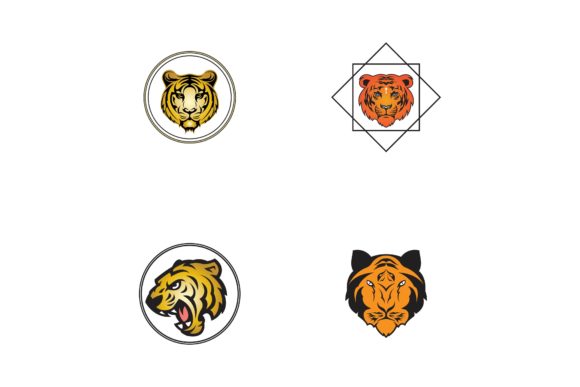
From Power to Brand: The Creative Utility of Tiger Logo Design
The tiger logo is more than a simple graphic; it is a potent vessel for meaning. In a single glance, it communicates a spectrum of attributes: strength, aggression, elegance, wild beauty, and unyielding power. This makes it a remarkably versatile and compelling choice for anyone looking to forge a visual identity. Whether you are designing for a sports team, a security firm, a luxury brand, or a personal project, the tiger symbol offers a rich foundation from which to build.
Why Tiger Logo Resonates Across Audiences
Its effectiveness stems from deep-rooted universal associations. The tiger is a top predator, synonymous with mastery and dominance—ideal for brands projecting confidence and competitive edge. Its striped coat suggests uniqueness and pattern, useful for companies in fashion, technology, or creative industries. The animal’s blend of fierce power and serene beauty allows for a wide stylistic range, from aggressive mascots to elegant, minimalist icons.
For creators, the tiger logo provides a recognizable shape that is adaptable. The basic elements—the head, the stripes, the intense eyes—are globally understood. This means you can start with a strong, recognizable core and then apply your own creative filter, whether that’s through abstract geometry, vintage line art, or modern flat design.
Exploring Creative Directions and Styles
The first step is deciding on the emotional tone and application. A logo for an esports team or a gaming tournament might leverage a more aggressive, detailed tiger face, perhaps integrated with digital elements like circuitry or sharp, angular shapes to convey speed and attack. Think of a snarling tiger head as a gaming mascot or a sleek silhouette for a player icon.
Conversely, a financial services company or a corporate brand might opt for a more restrained interpretation. A geometric tiger head, built from clean lines and symmetrical shapes, can symbolize structure, intelligence, and strategic strength without overt aggression. This approach uses the symbol’s power but channels it into stability and precision.
Consider also the vast space between these poles. A fashion label could use the tiger’s stripes as a textured pattern within a logo, focusing on the aesthetic of the fur and skin. A wildlife conservation or educational project might prefer a realistic, portrait-style tiger head to emphasize natural beauty and biological detail. For a personal tattoo or art project, the focus might be on traditional, decorative elements—ornate outlines, calligraphic integration, or symbolic combinations with other natural elements like jungle foliage.
Key Stylistic Variations to Consider
- Silhouette & Outline: Offers clarity and impact, perfect for sport team badges, simple emblems, and web icons where scalability is key.
- Line Art & Monogram: Elegant and often symmetrical, suitable for luxury brands, stationery, and invitations where a touch of classic style is desired.
- Geometric & Abstract: Breaks the tiger into shapes and patterns, conveying a modern, tech-forward, or conceptual feel for software companies or innovative startups.
- Vintage & Ornamental: Uses detailed engraving styles, often within a shield or crest, projecting heritage, tradition, and craftsmanship for clubs, schools, or heritage brands.
- Cartoon & Mascot: A more approachable, energetic character style, ideal for community events, children’s brands, or friendly but spirited team identities.
Adapting the Design for Context and Platform
A great tiger logo must function across media. A detailed, roaring tiger face might look stunning on a website banner but lose all definition when shrunk for a social media profile picture. Start by defining the primary applications. If the logo will live mostly in digital spaces (Twitch emotes, app icons, gaming backgrounds), prioritize bold shapes and limited detail that remains clear at small sizes.
For print applications—business cards, fabric for apparel, event invitations—you can explore more texture and nuance. A logo intended for embroidery on team jerseys needs a strong, enclosed shape, whereas a logo for a sleek tech company’s office decor might be a minimalist, single-line tiger head.
Always consider your audience’s immediate perception. A logo for a security company should emphasize the tiger’s protective, vigilant aspects—perhaps a focused, watchful eye or a guarding posture—rather than pure aggression. A logo for a creative agency might highlight the tiger’s striped pattern as a metaphor for unique ideas and creative stripes.
Practical Recommendations for Effective Design
- Define the Core Message: Is it power, protection, uniqueness, speed, or beauty? Let that single idea guide your stylistic choices.
- Simplify for Versatility: Create a master version, but also develop simplified variants (a solid silhouette, a head-only version) for different contexts.
- Integrate Typography Carefully: If your logo includes text, ensure the font complements the tiger’s character. A sleek, modern font pairs with a geometric tiger; a bold, blocky font fits a sports mascot; a script font might accompany a vintage emblem.
- Test in Application: Mock up the logo on a t-shirt, a website header, a mobile app icon, and a business card. Does it remain effective and recognizable?
- Seek Originality Within Recognition: Use the common understanding of a tiger to your advantage, but add a unique twist—through your color palette (not just orange/black), composition, or combined elements (e.g., a tiger head within a specific shape like a shield, a key, or a digital hexagon).
The Tiger Logo as a Creative Catalyst
Ultimately, working with a tiger logo is an exercise in focused creativity. It provides a strong, thematic anchor—the concept of the tiger itself—which frees you to explore execution. You are not inventing the meaning from scratch; you are channeling and directing an existing, powerful narrative into a specific visual form for your specific purpose.
This makes it an excellent starting point for designers, marketers, and entrepreneurs who need a symbol with immediate impact but also desire creative depth. From a fierce predator head for a competitive brand to a stylized, striped pattern for a decorative fabric line, the tiger logo proves that a strong natural element, when thoughtfully adapted, can become a timeless and effective piece of visual communication.